Dhock Dhock Dhock Dhock
Dhock Dhock Dhock Dhock
Dhock Dhock Dhock Dhock
Dhock Dhock Dhock Dhock
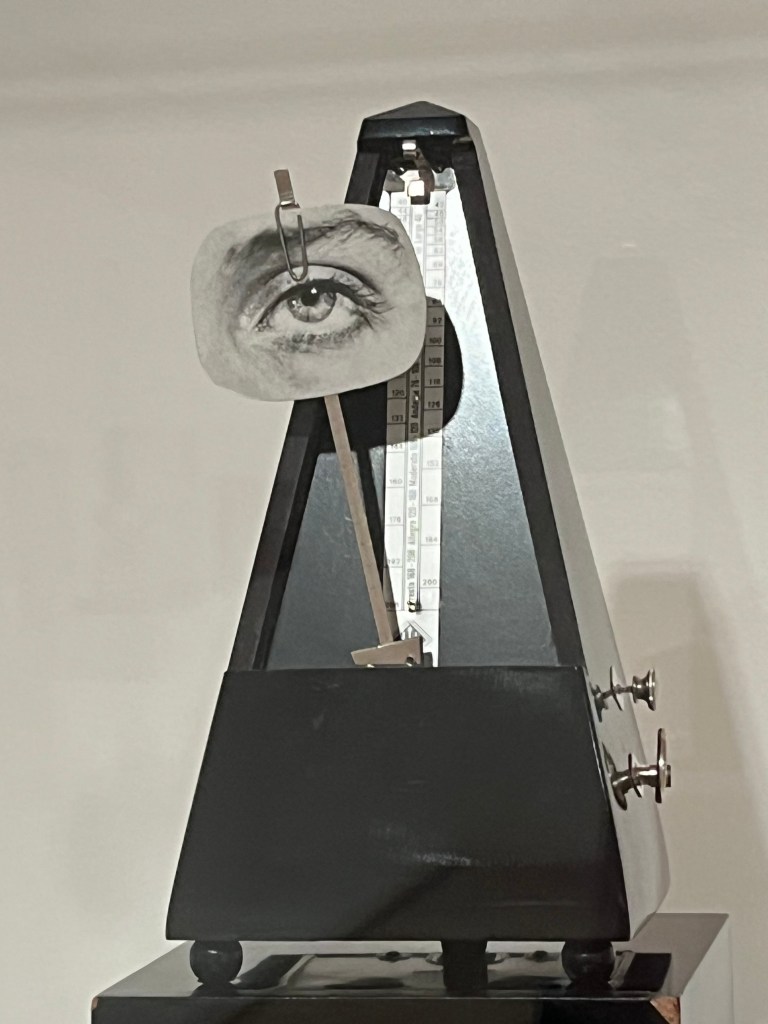
Emmanuel’s brush beats the canvas to the march of the metronome over his shoulder. Each stroke per the rhythm dictated by his mechanical conductor: Every stroke under close monitoring by the tyrant’s eye. The machine watches his back, his aching muscles, as he paddles on the canvas.
Dhock Dhock Dhock Dhock
Dhock Dhock Dhock Dhock
Dhock Dhock Dhock Dhock
Dhock Dhock Dhock Dhock
The machine flogs the back of his psyche; martinet-omnipotent built to discipline lazy Emmanuel. The gaze, the gaze, the ever-present gaze swinging back in forth in the crunching throb. Stuck to the machine, the eye of Lee, the girl who saw everything: the girl who saw he was weak, the girl who saw a life more golden without him.
Dhock Dhock Dhock Dhock
Dhock Dhock Dhock Dhock
Dhock Dhock Dhock Dhock
Dhock Dhock Dhock Dhock
It was Emmanuel who had wanted to control her. Emmanuel who wanted her to fit inside his lens and model the way he directed. But you can’t love someone for their moxie and expect also to contain it. Now it’s she, broken from his grasp, that stands over him unblinking, dictating the metered pace. It’s Lee behind the lens now, and Emmanuel cannot leave the frame, and he cannot break his pose.
Dhock Dhock Dhock Dhock
Dhock Dhock Dhock Dhock
Dhock Dhock Dhock Dhock
Dhock Dhock Dhock Dhock
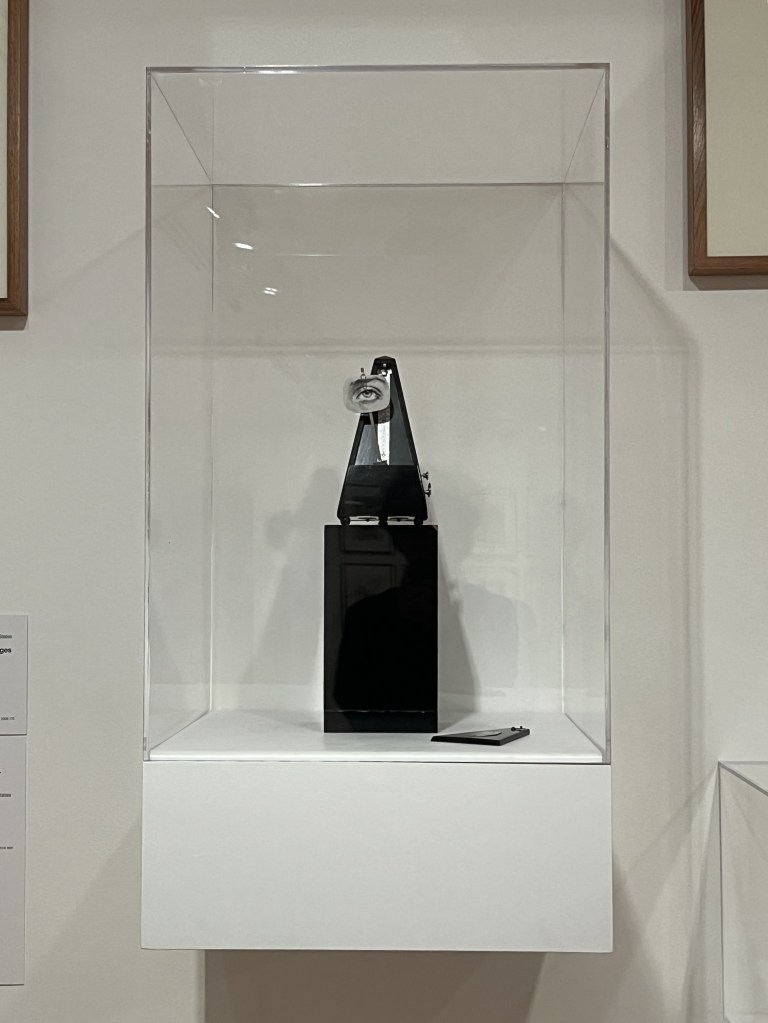
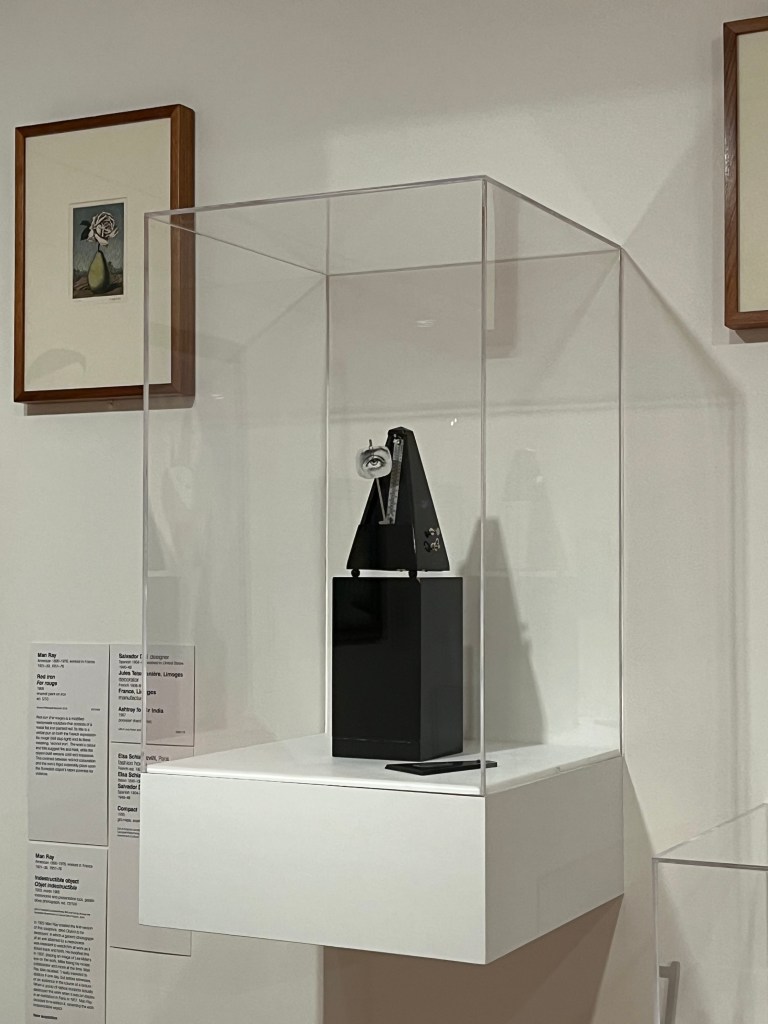
FOR YOUR VIEWING PLEASURE, the National Gallery of Victoria has acquired surrealist artist, Man Ray’s, Indestructible Object. A metronome with an eye paperclipped to the pendulum, the sculpture is an iconic representation of surrealism and ‘found art’.
Man Ray first designed the artwork as a “silent audience” to watch him while he painted, and to give him a pace to time his brushstrokes. The eye stuck to the metronome is that of his ex-girlfriend Lee Miller.
The two had worked together as photographers- Lee having started out as his muse and student- during which time a romantic side developed in their relationship. After three years however, Lee broke things off with Ray and moved to New York where she started a commercial photography studio.
Miller was a tenacious force who went on to accomplish astounding things in the world of art and beyond- not the least of which was releasing some of the first photos of German concentration camps to the world.
It’s unknown why she chose to leave Ray, but it is speculated he may have shared the misogynistic mindset held by his contemporaries- Picasso and Dali to name two- who treated women as dehumanised, sexualised objects in their artistic pursuits. Ray also took credit for some photographs taken by Miller during their time together.
It was after their breakup that Ray rehashed his idea for the Object to be Destroyed (having created a version a few years before) but this time paperclipping Miller’s eye to the pendulum.
Allegedly, the metronome sat in his studio as he timed his brushstrokes with the beat; Miller’s eye, her photographic eye, watching over him, never blinking, as he worked.
In time, the Object gained notoriety of itself as an example of Surrealist and Found Art (think Duchamp’s famous urinal, Fountain) and was exhibited in Dada and Surrealist exhibitions alongside his and other contemporaries’ work.
Shockingly, in 1957, the Object to Be Destroyed was destroyed while on exhibition in Paris. The work was stolen by a group of alleged ‘reactionary nihilist intellectuals’, taken into the streets of Paris and shot with a pistol.
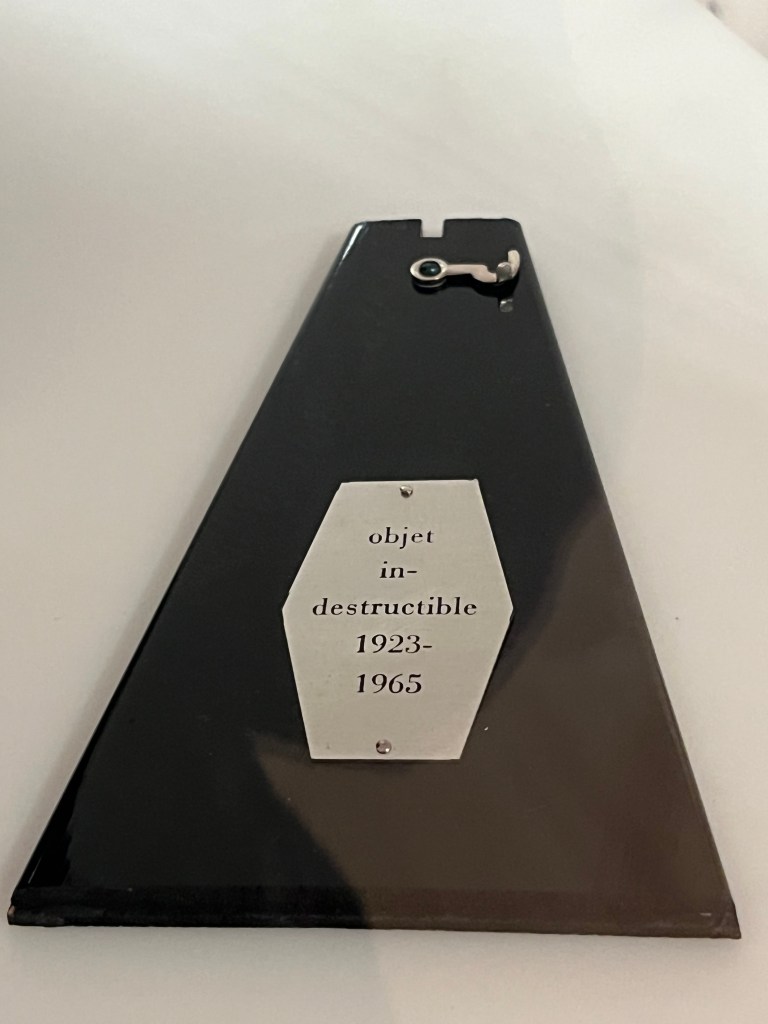
This prompted Man Ray to recreate his artwork a year later, this time calling it Indestructible Object.
Ray made an insurance claim on the smashed artwork and won the largest payout ever received for a metronome. Other than providing a laugh for all parties involved- his lawyer told him to buy an infinite supply of metronomes- the payout helped solidify “found art” and abstract work as legitimate (with likewise legitimate commercial value).
His insurers offered to restore the work for him, but he said he’d rather just take the cash. He then built another forty of the sculptures to be exhibited around the world. One of which can now be found on the Second Floor of the NGV International.
For anyone looking to play along at home, the following instructions were included under a picture of the artwork in Andre Breton’s 1932 edition of This Quarter:
“Cut out the eye from a photograph of one who has been loved but is seen no more. Attach the eye to the pendulum of a metronome and regulate the weight to suit the tempo desired. Keep going to the limit of endurance. With a hammer well-aimed, try to destroy the whole at a single blow.”
Jacob Hache, 16/3/25
 Dot Dot Dot
Leave a comment